Table Of Content

Perhaps her patchwork dresses, which served as “simulism” experiments, are her most well-known pieces of clothing. Delaunay made her costumes stand out by combining a range of hues and fabrics, using vivid geometric forms and dramatic color blocks. Her emancipation of the feminine silhouette in clothes after World War One contributed to her success in the fashion industry. Her works of art and creations continue to impact contemporary design firms like Christian Dior and Yves Saint Laurent. Ruhlmann used a sturdy wood that stood out dramatically against the complex ivory pattern, departing from the conventional Art Nouveau style’s symmetry and limited color palette. Despite this, the intricate floral details significantly referenced the Art Nouveau design, and the État Cabinet was a more modern and straightforward piece that seemed to be caught between the two styles of Art Nouveau and Art Deco.
Art Nouveau and Art Deco History
Art Deco was a direct response aesthetically and philosophically to the Art Nouveau style and to the broader cultural phenomenon of modernism. While the Art Nouveau movement derived its intricate, stylized forms from nature and extolled the virtues of the hand-crafted, the Art Deco aesthetic emphasized machine-age streamlining and sleek geometry. The French government, which hosted the exhibition between the esplanade of the golden-domed Les Invalides and the entrances of the Petit Palais and the Grand Palais on both sides of the Seine River, endeavored to showcase the new style. Over 15,000 artists, architects, and designers displayed their work at the exposition. During the seven months of the exhibition, over 16 million people toured the many individual exhibits.
Characteristics of Art Deco style
You can’t help hearing the clinking of champagne glasses, the roaring of jazz horns and the crowded laughter of pearl-clad socialites. You can’t help wondering about a future that might have been, if not for the shadows of economic depression and world war. Maybe what makes Art Deco so enduring is not just the boldness of its style but the joie de vivre it manages to encapsulate. At the same time, other artistic movements of the period were laying the groundwork for the stylistic direction of Art Deco. The movement borrowed Cubism’s bold abstraction and rectilinear shapes and Futurism’s vision for the heights of civilization, which brought rampant and unapologetic decoration to the style.
Pre-Raphaelite Brotherhood Art Movement: History, Artists, Artwork
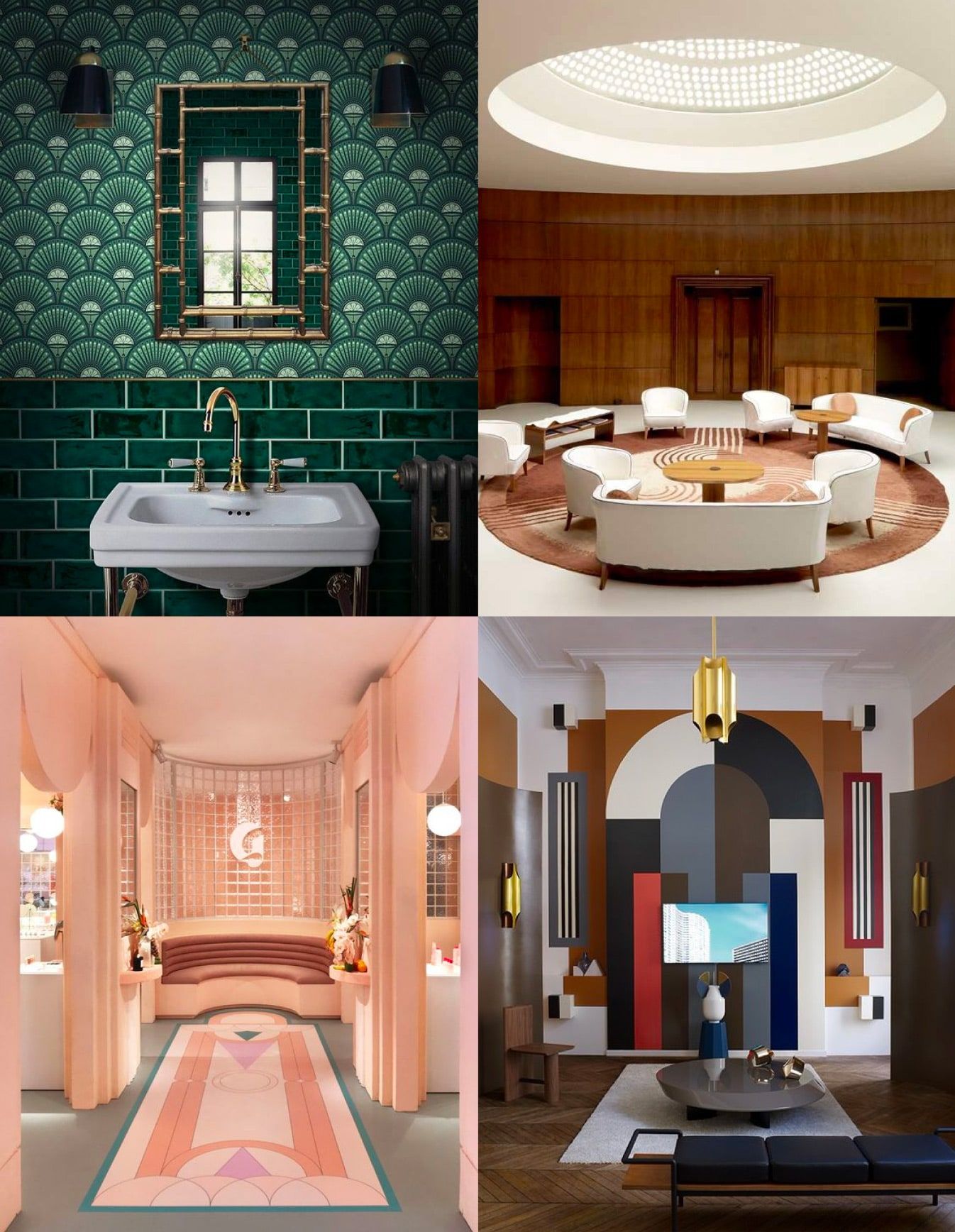
Typography was affected by the international influence of Art Deco and the typefaces Bifur, Broadway, and Peignot immediately call the style to mind. While proponents of the style hailed it as a stripped-down, modernist response to the excessive ornamentation, especially in comparison to its immediate predecessor, Art Nouveau, as any decoration was superfluous for Le Corbusier. It wasn't until the late 1960s, when interest in the style was reinvigorated, that the term "Art Deco" was used in a positive manner by British art historian and critic Bevis Hillier. Although the style went out of fashion in most places during World War II, beginning in the late 1960s there was a renewed interest in Art Deco design.
Adolphe Jean-Marie Mouron, a French painter and poster artist better known by his pen as “A.M. Cassandre, a key figure in the Art Deco movement and a graphic designer, invented the now-famous Pivolo Aperitif Aux Vins De France in 1924. This poster received recognition at the 1925 International Exhibition of Modern Decorative and Industrial Arts in Paris. Cassandre’s poster was generally believed to be instrumental in popularizing the Art Deco movement worldwide.
Glass art
His glasswork creations are still highly prized by collectors, and his reputation as an Art Deco artist is still strong today. Throughout his career, Lalique is most remembered for his exquisite jewelry, vases, chandeliers, clocks, and perfume bottles. Lalique went on to work with renowned French jewelers like Cartier and Boucheron after swiftly becoming one of the most well-known Art Nouveau jewelry designers. Lalique rejected the Art Nouveau aesthetic in the 1920s and showed an interest in fluid and organic shapes after refining his works of glass art.
The Art Deco architectural movement was the most influential branch of this movement since it gave rise to some of the most recognizable contemporary public structures in American cities to this day. These include the magnificent Chrysler Building, the Empire State Building, and the Rockefeller Center, all of which were constructed in New York City. Metal elements highlight the hard-edged, opulently decorated designs of the Art Deco architectural style. Because of its widespread popularity, each city developed their own unique take on the look. “Until this point, American architects really tended to design their buildings with one eye looking over their left shoulder at Europe,” Robins explains.
Art Deco Los Angeles
In the kitchen, curved kitchen counters evoke 1930s design, while green marble nods to the colour of the building itself. Completed in the late 1980s, the iconic Bank Tower is one of those structures that sneak up in vistas to remind you that yes, you’re in Los Angeles, in case you were wondering. It was the tallest building west of the Mississippi for 27 years, until the Wilshire Grand Center’s spire was added this year. Designed by the architect Henry N. Cobb, the building is topped with a distinctive crown that hints at downtown’s Art Deco past. Despite its size, it is not exactly the first building that comes to mind when people think of Los Angeles.
Introduce art deco style
Similar to its predecessor, Art Nouveau, when objects such as flowers, animals, or human figures are represented, they are highly stylized and simplified to keep with the overall aesthetic of Art Deco. The nature and extent of the stylization and simplification or stripping down varies depending upon the regional iteration of the style. This sporty, two-seater coupe was designed by the Italian-born French coachbuilders Giuseppe Figoni and Ovidio Falaschi for rally races.
Le Corbusier, in particular, responded to the types of artworks produced by Ruhlmann by calling for the creation of uncomplicated and more practical furniture pieces instead. However, Ruhlmann strongly believed that the preservation of art relied entirely on the upper class, with his designs going on to perfectly capture the sensational and magnificent spirit of the time. In order to keep up with the style’s emphasis on modern technology, Art Deco artists joined natural materials with modern and man-made ones like synthetic plastic, glass, reinforced concrete, and stainless steel. However, when a splash of sophistication was needed from Art Deco artworks, designers worked to incorporate more unusual materials into their works to give off a wealthier feel, such as ivory, horn, and even zebra skin. Based on this, the Art Deco definition described the movement as one that was made up of bold geometric shapes and strong colors that were used in a variety of art forms, most notably in architecture and objects. Over the years, Art Deco has found expression in every medium, from graphic design to furniture to the digital worlds of video games.
Tulsa, Oklahoma, and Detroit, Michigan, in particular, have impressive collections of Art Deco structures. Streamline Moderne became the American continuation of the European Art Deco movement. New Objectivity artists and architects were inspired by the same kind of sober pragmatism that compelled the proponents of Streamline Moderne to eliminate excess, including the emotionality of expressionist art.
CF Appleton Museum to present new art deco collection for display - Ocala Gazette
CF Appleton Museum to present new art deco collection for display.
Posted: Thu, 21 Sep 2023 07:00:00 GMT [source]
The statue was completed in 1931 and can be seen from just about anywhere in the city. Young Lady with Gloves is one of her better-known pieces because of how much emphasis it places on aesthetics, precision, geometry, and color. This was due to the silk dress’s ability to stick to the woman’s body’s curves while emphasizing her breasts and nipples. Even though she is shown in a highly risqué way, the lady in the artwork looks reserved.
Tulsa People Events - Downtown Deco Design Deets w/ Streetwalker Tours - tulsapeople.com
Tulsa People Events - Downtown Deco Design Deets w/ Streetwalker Tours.
Posted: Thu, 29 Feb 2024 03:02:32 GMT [source]
Completed in less than two years, it was said that approximately four floors were built each week, which was a surprisingly rapid fast for the types of machinery that was available at the time. Due to this, the greatest achievement of Ruhlmann’s career was said to have been his ability to merge the classical style of the past with the more advanced style of the modern world. The modernists established their own organization in 1929, which was called the French Union of Modern Artists. Creatives within this group included Pierre Chateau, Francis Jourdain, Le Corbusier, and Sonia Delaunay.
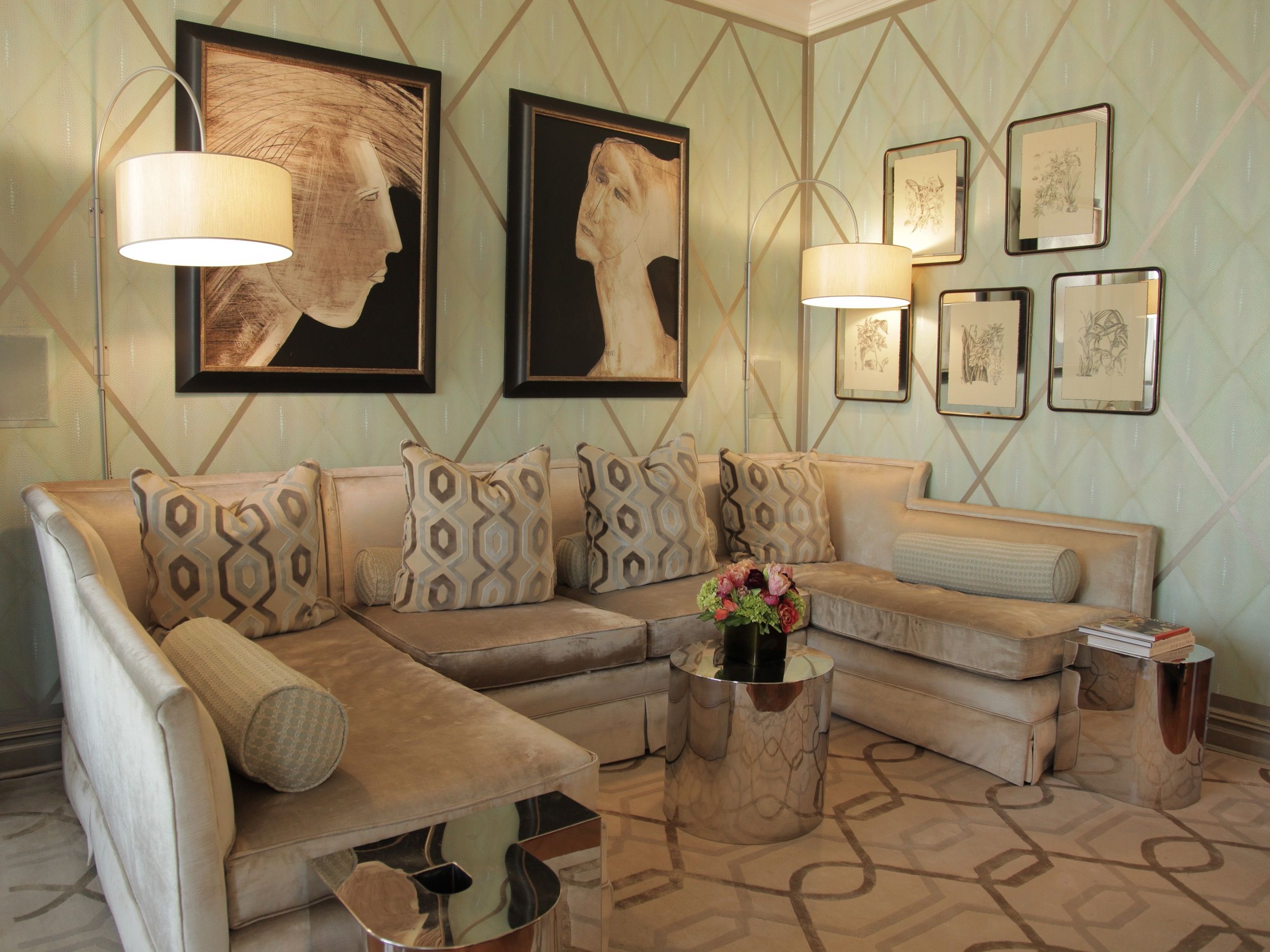
All three shared an emphasis on clean, strong lines as an organizing design principle. Art Deco practitioners embraced technological innovation, modern materials, and mechanization and attempted to emphasize them in the overall aesthetic of the style itself. Art Deco came to be regarded by admirers who were in-step with the forward-looking perspectives of contemporary avant-garde movements. Ironically, modernist painting and sculpture played a secondary role in the exhibition with the few exceptions of the Soviet pavilion and Le Corbusier's Esprit Nouveau pavilion. Lalique's sculpture nearly shouts "Art Deco," so exemplary is it of the style that had by 1930, become the American aesthetic par excellence. Spanning many media and even functions, the style was stamped on everything from luxury ocean liners and racing cars, to toasters and toilets.
Lempicka was regarded as one of the most notable portrait painters of her period, and the art deco aesthetic is perfectly embodied in her paintings’ sleek elegance and clear lines. One of her most well-known paintings, Young Lady with Gloves, created in 1930, is among her signature pieces. She is shown as a stylishly modest woman wearing a green dress, enhanced by her discreetly matching white hat and gloves. Her paintings, which drew influence from movements like cubism, expertly captured a life of luxury and glitz. She could offer opulent but crisp and precise paintings because of her approach to Art Deco painting.
Jewel tones like emerald, gold, and sapphire are seen in this sitting area designed by Jessica Lagrange Interiors. A starburst-inspired design on the floor of a home designed by Jessica Lagrange Interiors. In the United States, the Works Progress Administration helped Art Deco architecture become mainstream. Interestingly, the merger of Art Deco and Beaux-Arts classicism seen in many Depression-era public works has come to be known as PWA Moderne or Depression Moderne. Art Deco architecture began in Europe, but by 1939 there were examples in large cities on every continent and in almost every country.


No comments:
Post a Comment